
Studio Ayra: How to do consistent good work

Human beings are pattern recognition machines. “Oh, it is just like the other thing I saw yesterday”. Designers and engineers constantly exploit this pattern recognition capability to create innovative solutions or products. Pattern recognition also enables designers to create designs that give a sense of wow when people can connect the dots. This effect is particularly impressive when you can connect the things that people have never thought about connecting before. The work by illustrator and designer Christoph Niemann is a great example of this.
We also tend to draw patterns from other sources and apply them in novel ways. We may take inspiration from nature and apply that pattern or feature in a product we design. Take the example of how the front end of the bullet train was designed based on the Kingfisher’s beak. This is known as biomimicry.
Being a designer myself, patterns play a huge role in my life and I am constantly observing them. This is how my brain functions on a day-to-day basis. To me, the most interesting patterns are the ones you didn’t know existed before but when you finally see them, you can never unsee them.
When I started learning pottery, naturally I saw there was a huge overlap with design. This was not particularly a difficult connection to make. As I was talking to various ceramicists for my research, I found out about Ayra (Ayushi Rastogi), who is a ceramicist based out of Coonoor. What stuck out the most about her work was not just the finish and craftsmanship but also the patterns I could observe. Her sculptural pieces are inspired by nature, trees, and flowers and they also have these skewed proportions much like a caricature drawing but are very balanced overall.
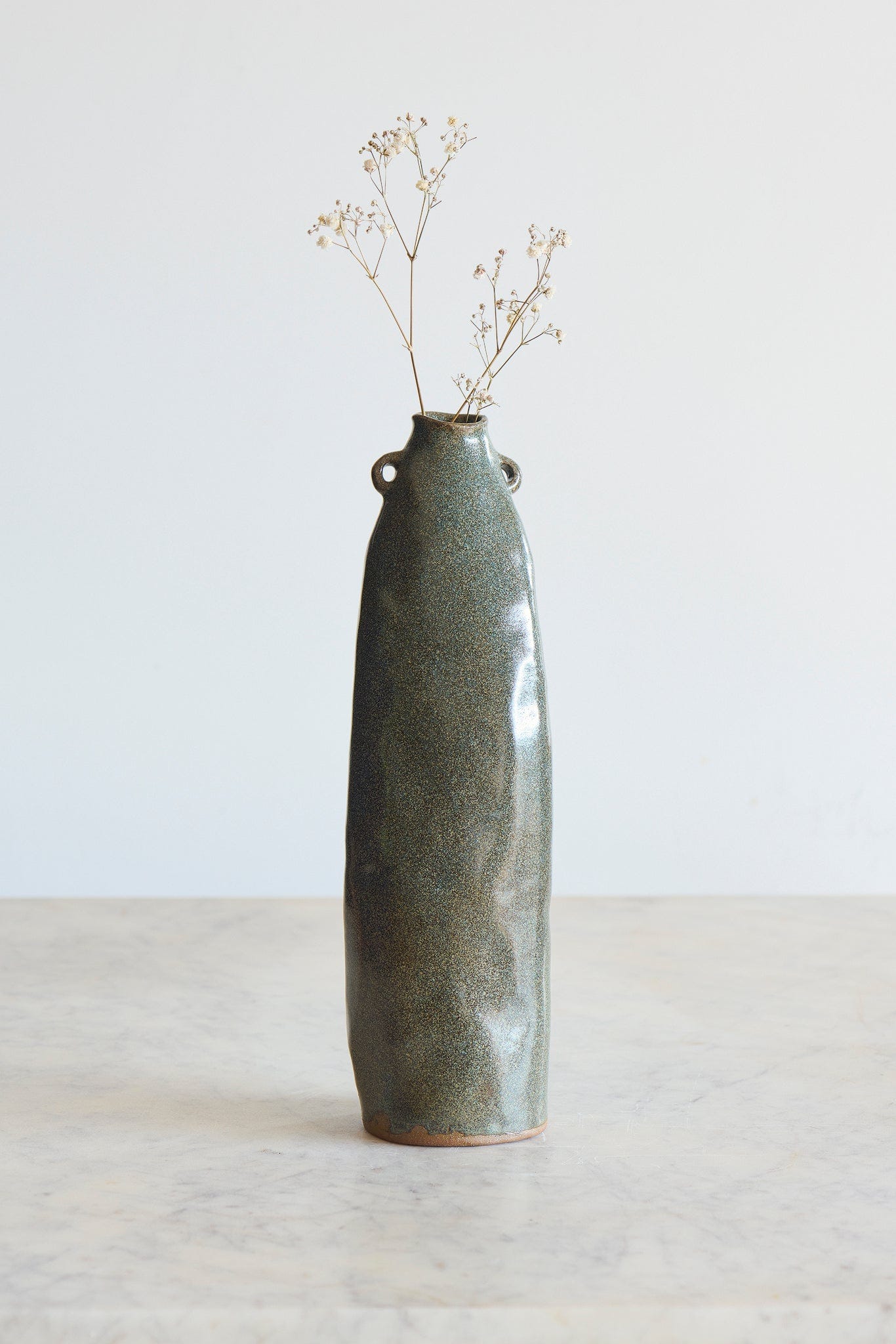
I was quite impressed with the overall quality and the way in which it was presented. “Wait a minute, a potter living just a couple of hours away in the Nilgiris, and producing this high-quality work?” I thought to myself. If you know me, it means only one thing. I would never miss a chance to ride on the twisty roads and also to meet a talented creative. I reached out to her and asked if I could visit the studio and chat for a bit. I was hoping maybe she would give me the recipe for the secret sauce.
Thankfully she was kind enough to let me visit. I booked a hotel, packed my bag, and left. Riding to Coonoor is so much fun once you cross the Mettupalayam. As you climb, you can feel the temperature drop, the air gets cleaner, and every once in a while after a breeze, you can smell the tea leaves from the plantations that are on either side of the roads. I had to take a longer route since the main route was blocked for the election rally. The roads were narrow but it has fewer hairpin bends. After 3 hours of ride, I reached my hotel and checked in. I freshen up, grab a quick lunch, and head out to her studio.
Coonoor is a small town but densely packed. It’s en route to one of the most popular holiday destinations in India, Ooty. People prefer traveling to Coonoor because it’s not as heavily commercialized as Ooty. Ayra who is originally from Dehra Dun moved here because it reminded her of Dehradun of the past. She discovered it when visiting her sister who was studying at Ooty a few years ago.
Nevertheless, Coonoor is still quite an expensive place to visit during the holiday season. After a quick 10-minute ride, I finally arrived at her studio, parked my bike outside, and rang the bell. I was greeted by Ayushi herself and her cat Alphie. I had a lot of questions but didn’t want to take away too much of her time as I quickly realized she had to work on her commissioned pieces that day.
First, she gave me a studio tour which also doubles as her home. Every piece of equipment or item in the studio is organized in a way that she can operate efficiently and effectively. There were three wheels near the window and a workbench in the middle with shelves and a wedging table on either side of the room.
The kiln room is packed with glazes and bisque-fired pieces that are undergoing the process of firing. She also mentioned that she makes her own glazes as it is harder to find the ones with matte finish. This also allowed her to avoid using toxic materials for making the glazes and have better quality control over the product. These custom glazes had a slick, earthy, and refined quality to them and are one of the striking features of her work. The kiln itself is one of the bigger ones manufactured by SKUTT and it was far bigger than I imagined it to be. The room had enough ventilation so that the fumes could be let out during the firing process.
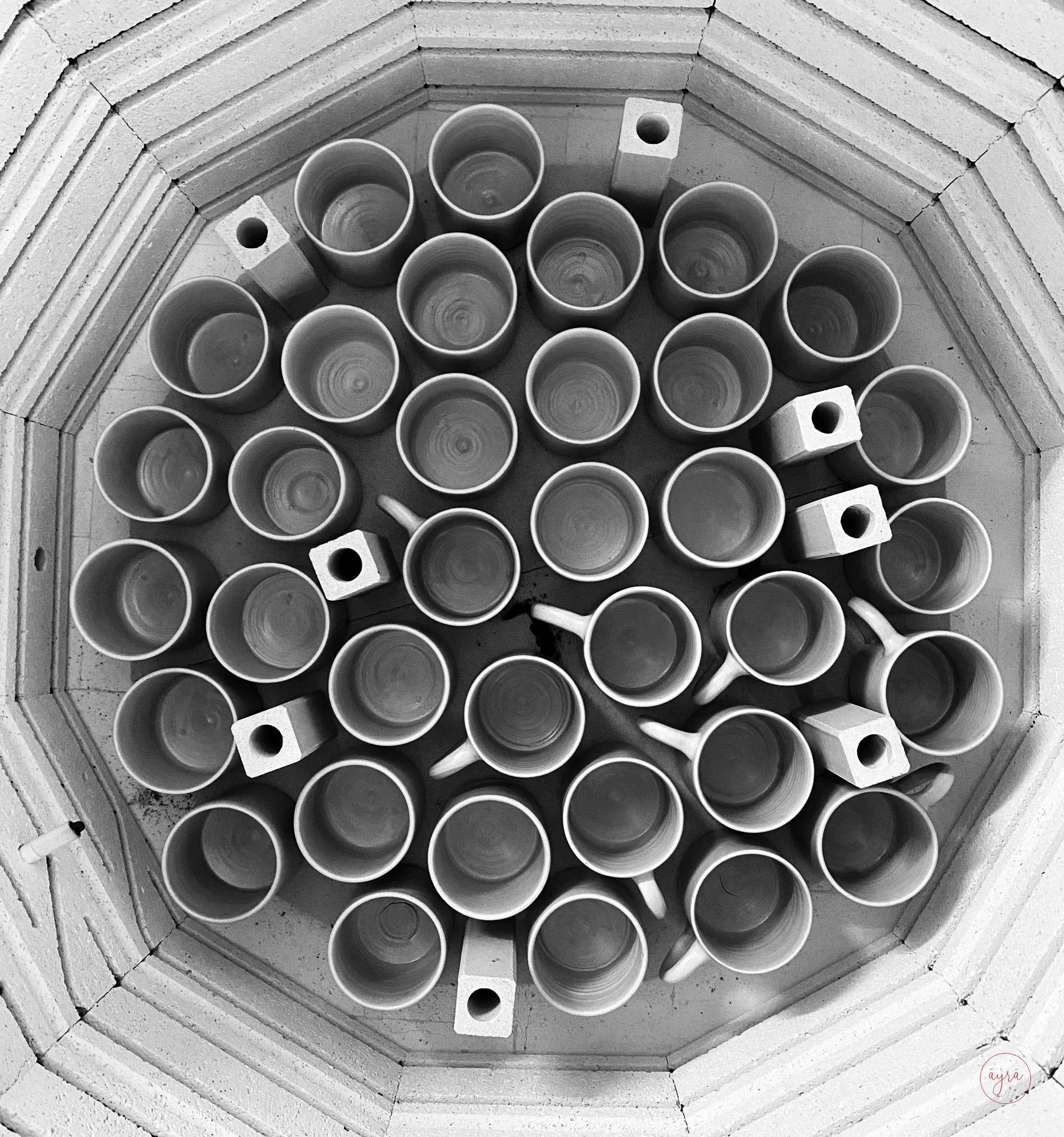
Seeing a fully functioning studio in person gave me a better perspective on how many things are needed to make it work. Since I am in the learning phase, I haven’t even thought about the glazing part in detail yet as I am still focused on making tasteful, and balanced forms.
Apart from the operational part of the business, I also wanted to chat about the process in detail. From what I understood slowing down has been an important aspect of finding her creative voice.
When working with ceramics you realize that no part of the process can be rushed and it requires a certain mental state and pace. This is completely opposite of how most people live in today’s world. Each and everything in the studio has its purpose and she is a big believer in minimalism as a philosophy for life and work. The culmination of her philosophy of work, the mindset required to make good ceramic products, and how she organizes her working space culminates into the products that you see on her website.
One of the terms I always keep in mind when working with clay is that “clay remembers”. Clay is plastic and forgiving but it also reflects how you handle it. Each and every touch and patchwork can be seen in the finished product. If not handled with care, the piece might not survive the firing process. Every piece you make in a sense, is an extension of yourself.
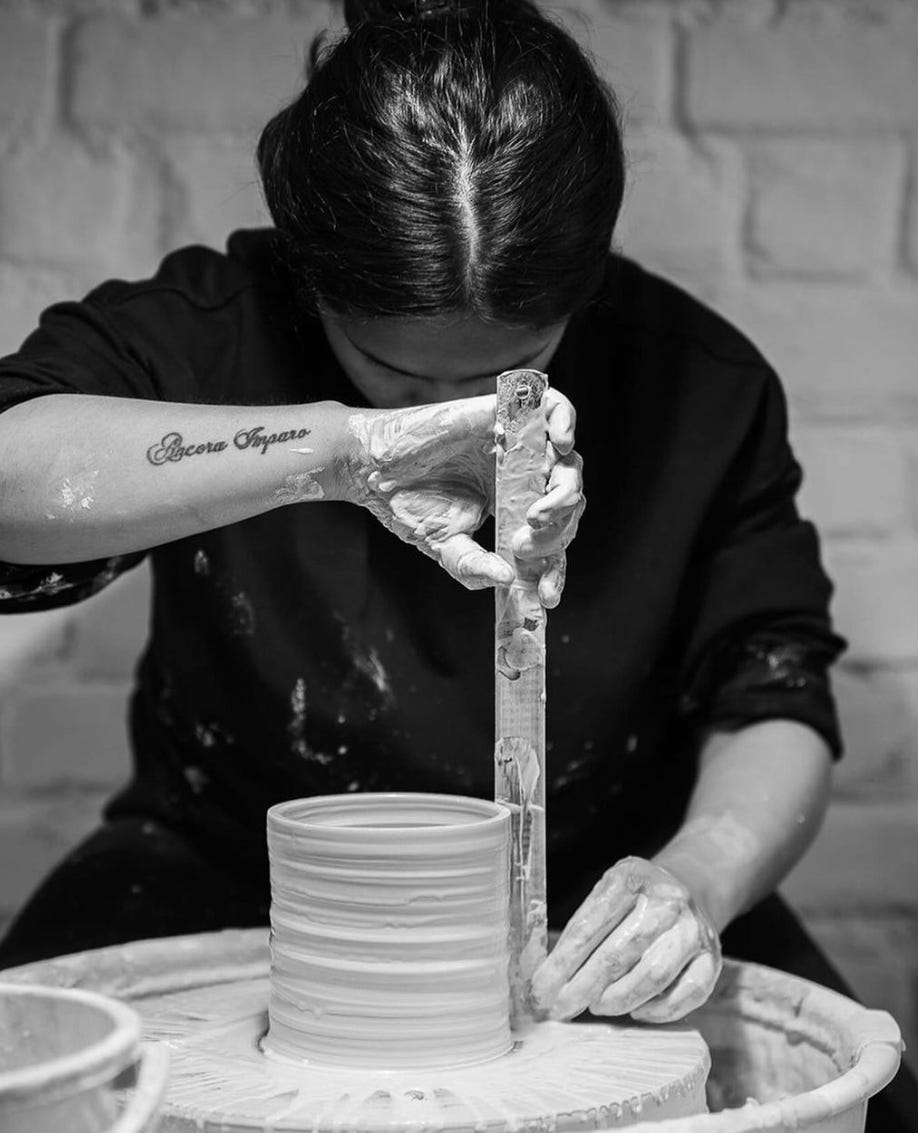
We chatted for an hour and a bit and it was mostly about how to approach this in a structured way as I was feeling a bit lost. One of the ways I relate to her experience is being a self-taught designer. Committing mistakes over the years and learning from them. I was able to map some of her patterns of experience to my design journey. It is about spending a lot of time researching, studying, and experimenting to get the fundamentals strong. The path has not always been straight forward but it is rewarding.
It so happened that she also conducts impromptu workshops for people who are visiting Coonoor for the holidays. A couple of folks enquired about it and I joined along with them the next day and made a tiny little vase.
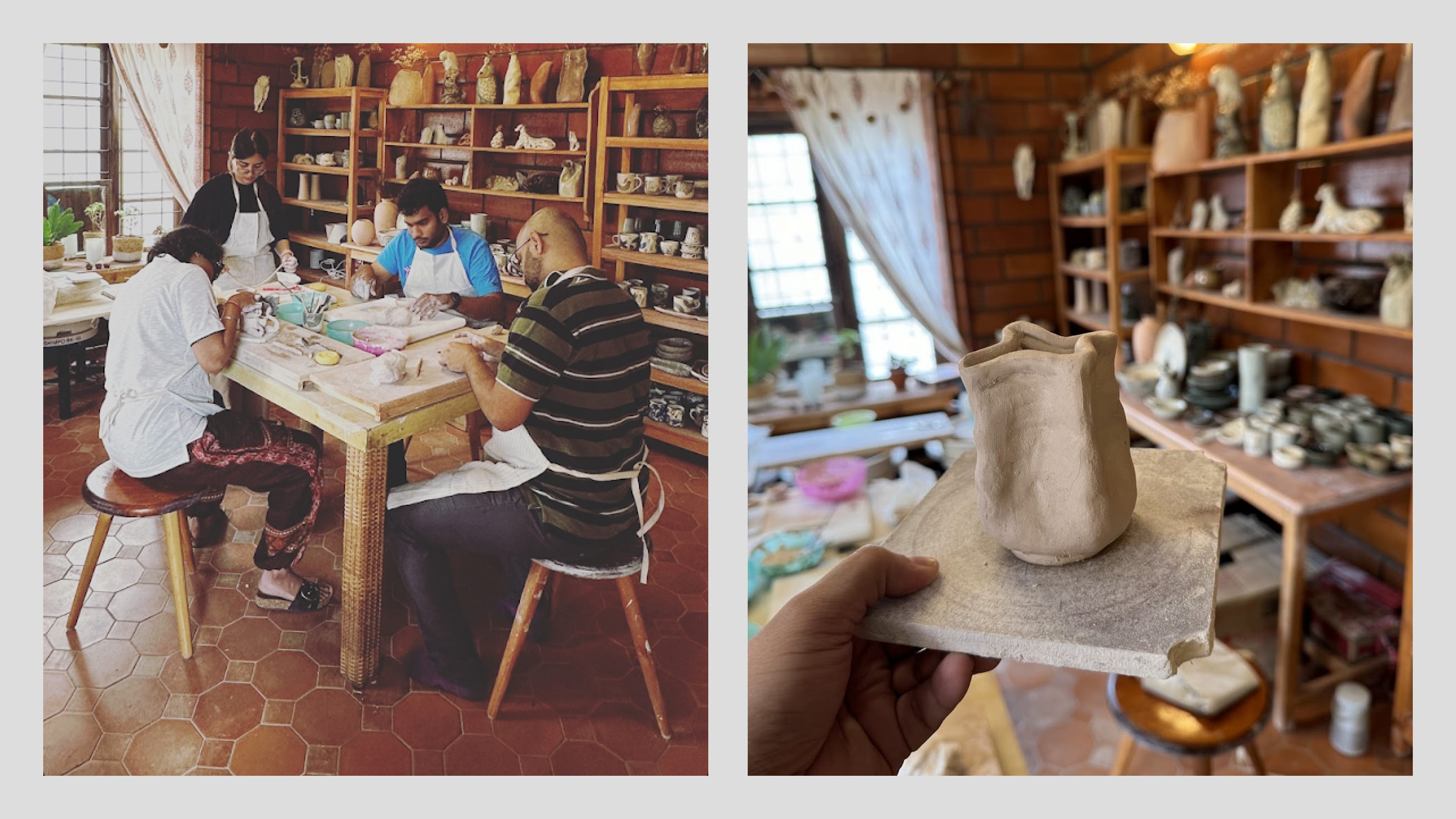
I didn’t have any particular goal in my mind for this trip. Come to think of it, the goal was the trip. I got out of my house, had a fun ride, met a talented artist, and got to make a tiny little product. It consisted of everything I enjoy doing. In the beginning, I mentioned that I hoped she would give me the recipe for the secret sauce. I lied. Because I knew, there was no secret sauce to begin with. Much like other creatives, Ayra’s approach is very similar. It is the deliberate, repetitive, and consistent practice that is the key to doing good work. If anything, this trip is a great reminder of this very fact.
Until next time.
You can check out Ayushi’s work on her website and Instagram. I will be traveling more and writing about pottery in various regions of India, so do sign up for the newsletter to read more such stories.